
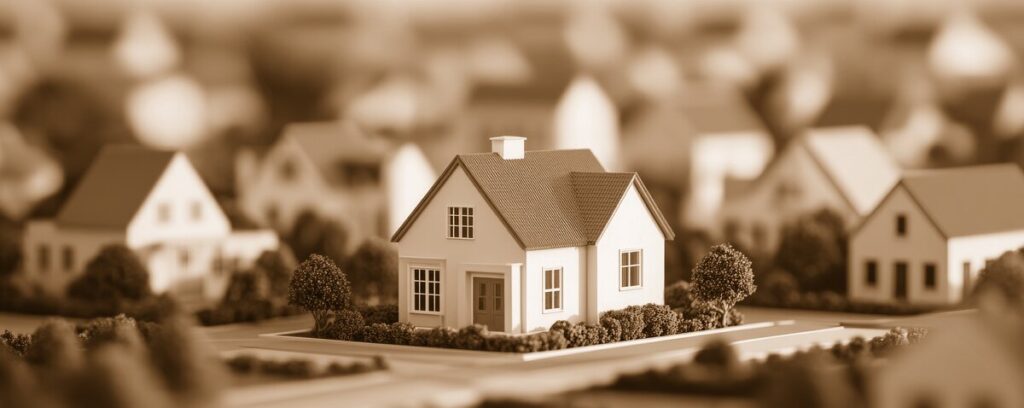
A Newer Neighborhood with Deep Local Roots
When people talk about the history of Naperville, they often begin with Joseph Naper, the DuPage River, the Riverwalk, and the preserved buildings of downtown. Stillwater tells a different kind of local story. Its heritage is not centered on an 1830s farmhouse or a century-old commercial block, but on the transformation of open farmland into one of southwest Naperville’s distinctive residential communities.
Located near 87th Street, west of Book Road and east of Route 59, Stillwater began taking shape in the late 1990s. The neighborhood is now known for large single-family homes, winding streets, pocket ponds, landscaped entrances, and the Stillwater Swim and Tennis Club. Many homes were built from roughly 1997 through the early 2000s, with later additions extending the community’s development into the following decades.
For longtime residents, Stillwater represents the period when Naperville’s growth moved decisively south and west. What had once been agricultural land became a carefully planned neighborhood connected to new schools, parks, roads, and commercial areas.
How Stillwater Got Its Name
The name “Stillwater” fits the neighborhood’s atmosphere: quiet streets, reflective ponds, gently curving roads, and a setting designed to feel removed from busy arterial roads. However, unlike some older Naperville streets and subdivisions, there is no widely published historical record identifying a specific person, farm family, or natural waterway after which Stillwater was named.
That absence is itself revealing. The name appears to belong to the tradition of late-twentieth-century suburban development, when builders and planners selected names meant to suggest calm, nature, and permanence. Stillwater’s ponds and water-oriented landscaping reinforce that impression. In other words, the name seems less like a reference to one historic event and more like an expression of the peaceful lifestyle the development was intended to offer.
Residents often notice how well the name continues to suit the place. Even with hundreds of homes, the neighborhood’s internal streets feel sheltered. Water, trees, open lawns, and cul-de-sacs soften the appearance of a community that was once simply part of the rural edge of Naperville.
The Development Era of the 1990s
Stillwater’s origins coincide with one of the most important growth periods in Naperville’s history. The city had expanded dramatically after World War II, especially during the building boom of the 1960s, 1970s, and 1980s. Developers created communities such as the Highlands, Maplebrook, and Green Acres, establishing the suburban pattern of homes, schools, parks, and shopping that would later continue in south Naperville.
By the 1990s, the city’s population growth and strong school systems were drawing families farther south. Stillwater benefited from that momentum. Its location offered access to Route 59, 87th Street, Book Road, and the developing network of southwest Naperville roads. The neighborhood also became part of Indian Prairie School District 204, with residents associated with Welch Elementary School, Scullen Middle School, and Neuqua Valley High School, depending on the particular address and attendance boundaries.
The first phases were recorded in the late 1990s. A 1997 subdivision document identifies Stillwater units and plats recorded in Will County, providing a useful milestone in the neighborhood’s early history.
Streets, Homes, and Architectural Character
One of Stillwater’s most recognizable features is its variety of large traditional-style homes. Rather than presenting a single uniform architectural style, the neighborhood includes traditional, Georgian, and custom-built designs constructed by several builders. That variety gives streets such as Charlestowne Lane and Skylane Drive a more established appearance than their age might suggest.
The neighborhood’s layout also reflects the planning preferences of its era. Curving roads, cul-de-sacs, sidewalks, landscaped setbacks, and open areas create a setting intended for family life rather than through traffic. Houses generally face one another across broad lawns, while neighborhood paths and internal connections encourage walking, biking, and informal visits between neighbors.
Over time, the visual character of Stillwater has changed in familiar suburban ways. Young landscaping has matured into taller trees. Original homeowners have remodeled kitchens, finished basements, replaced roofs, and updated exteriors. Children who once rode bikes around the neighborhood have grown up, while new families have moved into houses that now carry their own memories.
The Stillwater Swim and Tennis Club
The most important community landmark within Stillwater is the Stillwater Swim and Tennis Club. More than a recreational amenity, the club has helped shape the neighborhood’s social identity since its early years.
The facility includes a zero-depth pool, a six-lane lap pool, four lighted tennis courts, and a clubhouse with gathering space. It has also been home to the Stillwater Starz swim team, giving generations of children a shared summer tradition.
For many residents, the club is where Stillwater’s history is most visible. Neighborhood heritage is often preserved through institutions rather than monuments. Swim lessons, tennis matches, pool gatherings, team celebrations, and summer parties create memories that are passed from one generation to the next. A child who learned to swim at Stillwater may later return as a parent, coach, or volunteer.
Parks, Trails, and the Wider Naperville Landscape
Stillwater does not stand apart from Naperville’s larger park system. Residents are close to the city’s extensive network of paths, athletic facilities, and riverfront open spaces. The DuPage River Trail and Dorothea Weigand Riverfront Park, at 2436 South Washington Street, provide access to fishing, trails, canoe launching, and sledding hills.
Downtown Naperville and the Riverwalk are also part of the neighborhood’s broader heritage. The Riverwalk began taking shape in 1981 as a community project associated with Naperville’s sesquicentennial, transforming riverfront land into one of the city’s best-known public spaces.
That connection matters because Stillwater’s story is not isolated from old Naperville. A family can live in a late-1990s subdivision, swim at a neighborhood pool, follow a trail along the DuPage River, and spend an evening among the historic buildings and public gathering places downtown. The newer neighborhood remains part of the same civic landscape established by Naperville’s earliest settlers.
How Stillwater Has Evolved
Stillwater has evolved from a new construction project into a mature neighborhood. Early residents watched empty lots become homes, roads receive their final paving, and young trees grow into recognizable streetscapes. Later additions brought more houses and extended the community’s identity beyond its original sections.
Today, the neighborhood’s heritage is found in its continuity. It is in the clubhouse that remains a gathering place, the familiar routes along 87th Street and Book Road, the ponds that reflect changing seasons, and the homes that have welcomed multiple generations.
Stillwater may not have the nineteenth-century buildings of Naperville’s Historic District, but it preserves another important chapter of local history: the story of how farmland became community. Its special character comes from the balance between planned suburban comfort and the enduring Naperville traditions of parks, schools, recreation, and neighborly connection.